

Most homeowners rarely think about how their roof is made until it’s time for a repair or replacement. Yet every asphalt shingle on your home is the result of a carefully engineered manufacturing process designed to withstand decades of exposure to rain, wind, sunlight, and changing temperatures.
Understanding how asphalt shingles are made can help homeowners appreciate what goes into one of the most popular roofing materials in North America and make more informed decisions when it’s time for a new roof.
In this guide, we’ll break down the asphalt shingle manufacturing process, explain the purpose of each layer, and explore how modern manufacturing techniques have made today’s shingles more durable, weather-resistant, and reliable than ever.
Since 1979, MHI Roofing has helped homeowners make informed roofing decisions through expert craftsmanship, honest recommendations, and decades of residential roofing experience.
If you’re considering an asphalt shingle roof replacement, contact MHI Roofing today to schedule your free roof inspection and estimate. Our team will help you choose a high-quality roofing system designed to protect your home for years to come.
What Are Asphalt Shingles Made Of?
Modern asphalt shingles are engineered using several layers that work together to provide strength, weather resistance, and long-term durability. While manufacturing methods vary slightly, most asphalt shingles contain four essential components.
Fiberglass Mat
The fiberglass mat forms the structural foundation of the shingle. Made from woven glass fibers, it provides strength while remaining lightweight and flexible.
The fiberglass mat helps:
- Maintain the shingle’s shape
- Resist tearing during installation
- Support the asphalt coating
- Improve overall durability
Modern fiberglass mats have largely replaced older organic felt because they offer better moisture resistance and more consistent performance.
Asphalt Coating
A layer of specially formulated roofing asphalt surrounds the fiberglass mat, creating the shingle’s primary waterproof barrier.
The asphalt coating helps:
- Prevent water intrusion
- Protect the fiberglass core
- Improve flexibility during temperature changes
- Bond the shingle’s layers together
Mineral Granules
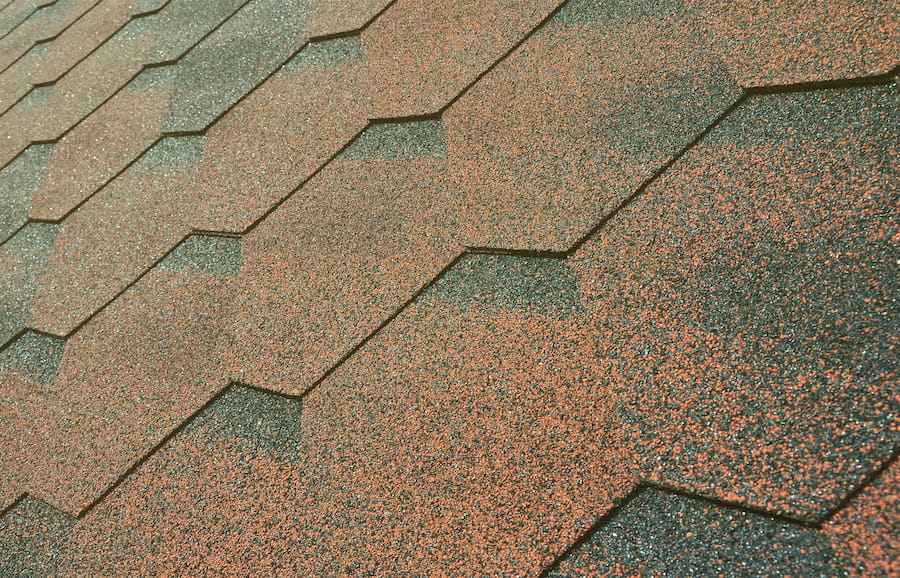
The outer surface is covered with ceramic-coated mineral granules that do much more than add color.
Mineral granules help:
- Shield the asphalt from UV rays
- Slow weather-related aging
- Improve fire resistance
- Add color and texture
- Extend the life of the shingle
According to the National Roofing Contractors Association (NRCA), these granules play a critical role in protecting the asphalt beneath from sunlight and environmental wear.
Sealant Strip and Back Surfacing
Modern shingles also include two less visible but equally important features.
- Sealant strip: A factory-applied adhesive that activates in the sun, helping shingles seal together for improved wind resistance.
- Back surfacing: A fine mineral coating on the underside that prevents shingles from sticking together during packaging and installation.
Although homeowners rarely see these components, they help improve installation, durability, and long-term roof performance.
How Asphalt Shingles Are Made
Every asphalt shingle starts as a combination of raw materials that move through a carefully controlled manufacturing process. Using automated production lines and rigorous quality control, manufacturers produce shingles designed to deliver consistent performance and long-lasting protection.
Step 1: Creating the Fiberglass Mat
The process begins with the fiberglass mat, the structural foundation of every modern asphalt shingle.
Manufacturers create the mat by weaving fine strands of molten glass into a continuous sheet and bonding the fibers together with specialized resins. The result is a lightweight, durable base that provides strength without sacrificing flexibility.
Because fiberglass resists moisture and tearing, it helps improve the stability and longevity of today’s asphalt shingles.
Step 2: Coating the Fiberglass with Asphalt
Next, the fiberglass mat passes through rollers that coat it with hot roofing asphalt.
This asphalt layer creates the shingle’s waterproof barrier while bonding the fiberglass core to the protective surface materials.
During this stage, manufacturers closely monitor:
- Asphalt temperature
- Coating thickness
- Material consistency
- Production speed
Maintaining precise control over these factors helps ensure every shingle delivers consistent performance after installation.
Step 3: Applying Protective Mineral Granules
While the asphalt is still hot, ceramic-coated mineral granules are evenly distributed across the surface and pressed firmly into place by large rollers.
These granules do far more than provide color. They help:
- Protect the asphalt from UV damage
- Resist weather-related wear
- Preserve color over time
- Improve fire performance
Some manufacturers also use specialty granules that help resist algae growth or increase solar reflectivity for improved energy efficiency.
Without this protective layer, the asphalt would deteriorate much more quickly when exposed to sunlight and the elements.
Step 4: Cooling, Cutting, and Packaging
Once the granules are embedded, the roofing material moves through a cooling process that allows the asphalt to harden.
Manufacturers then apply factory sealant strips and use precision cutting equipment to create individual shingles.
Before shipping, each shingle is:
- Inspected for quality and consistency
- Stacked into bundles
- Packaged for transport
- Prepared for delivery to roofing suppliers and contractors
By the time asphalt shingles leave the manufacturing facility, they’ve undergone a carefully controlled process designed to produce durable roofing materials ready to protect homes for decades.
How Manufacturers Test Asphalt Shingles
Before asphalt shingles ever reach a job site, they undergo extensive testing to verify that they meet industry performance standards. These tests help manufacturers evaluate how shingles perform under conditions that simulate years of real-world exposure.
While testing methods vary, quality asphalt shingles are commonly evaluated for:
Wind Resistance
Strong winds can lift shingles and expose the roof deck to water damage. Manufacturers test shingles to measure how well they resist wind uplift and remain securely fastened after installation.
Fire Performance
Asphalt shingles are also tested for fire resistance. Many residential shingles are designed to achieve a Class A fire rating, the highest rating available for roofing materials under standardized fire testing.
Impact Resistance
Some shingles are engineered to better withstand impacts from hail or falling debris. Impact-resistant products undergo specialized testing to determine how well they resist cracking or damage under simulated impact conditions.
Weathering and Durability
Manufacturers evaluate how shingles hold up to years of exposure to:
- Intense sunlight
- Heat
- Moisture
- Freeze-thaw cycles
- Temperature fluctuations
These tests help ensure shingles can maintain their performance in a variety of climates.
Industry Standards
Many asphalt shingles are manufactured and tested to meet standards established by organizations such as ASTM International, while fire classifications are commonly evaluated by UL Solutions (Underwriters Laboratories). These independent standards help establish benchmarks for product performance and safety.
Why the Manufacturing Process Matters
To most homeowners, asphalt shingles may look nearly identical. Behind the scenes, however, the quality of the materials and the manufacturing process can have a significant impact on how a roof performs over time.
A well-made asphalt shingle is engineered to deliver consistent protection against weather, moisture, and everyday wear.
Quality manufacturing helps provide:
- Reliable waterproofing: A uniform asphalt coating creates a consistent moisture barrier that helps protect against water intrusion.
- Better granule adhesion: Properly embedded mineral granules are less likely to loosen over time, helping shield the asphalt from UV damage and weathering.
- Stronger structural support: A durable fiberglass mat helps shingles maintain their shape and resist tearing during installation and throughout their service life.
- A more consistent appearance: Precision manufacturing helps ensure uniform color, texture, and dimensions for a cleaner, more attractive finished roof.
While homeowners may never see these manufacturing details, they play an important role in the durability, appearance, and long-term performance of an asphalt shingle roof.
Why Homeowners Trust MHI Roofing
Choosing quality asphalt shingles is only part of building a roof that lasts. Equally important is partnering with a contractor who understands how to install them for long-term performance.
Since 1979, MHI Roofing has helped homeowners protect what matters most with expert craftsmanship, honest guidance, and dependable roofing solutions. Our team takes the time to evaluate your home’s needs, recommend the right roofing system, and install every roof with attention to detail and industry best practices.
Homeowners trust MHI Roofing for:
- More than 45 years of residential roofing experience
- Free professional roof inspections and estimates
- Honest, no-pressure recommendations
- Expert asphalt shingle roof installation and replacement
- A commitment to quality workmanship and customer satisfaction
Whether you’re replacing an aging roof or planning ahead for the future, MHI Roofing is here to help you make a confident investment in your home’s long-term protection.
Protect Your Home With Expert Asphalt Shingle Roofing
Understanding how asphalt shingles are made gives homeowners a better appreciation for the materials protecting their homes every day. From the reinforced fiberglass mat and waterproof asphalt coating to the protective mineral granules, every layer is carefully engineered to help asphalt shingles withstand years of weather exposure.
But quality materials are only part of a reliable roofing system. Proper installation, attention to detail, and experience matter just as much when it comes to protecting your home and maximizing your roof’s performance.
Since 1979, MHI Roofing has helped homeowners across Morgantown and Pittsburgh make confident roofing decisions with professional inspections, quality craftsmanship, and dependable asphalt shingle installation. Our experienced team understands what it takes to build roofing systems designed for long-term protection, and we’re committed to providing honest recommendations based on your home’s specific needs.
If you’re considering a roof replacement or have questions about asphalt shingle roofing, contact MHI Roofing today to schedule your free roof inspection and estimate. We’ll assess your current roof, explain your options clearly, and help you choose a roofing solution that provides lasting value and protection for your home.
FAQ: How Asphalt Shingles Are Made
What are asphalt shingles made of?
Modern asphalt shingles are made from four primary components: a fiberglass mat for strength, a waterproof asphalt coating, ceramic-coated mineral granules for weather and UV protection, and adhesive strips that help shingles seal together after installation.
Why do asphalt shingles have granules on them?
Mineral granules protect the asphalt from ultraviolet (UV) rays, improve weather resistance, enhance fire performance, and provide the shingle’s color and texture.
Are fiberglass shingles better than organic shingles?
Most modern asphalt shingles use fiberglass mats because they offer improved strength, moisture resistance, and dimensional stability compared to older organic-based shingles, which are no longer commonly manufactured.
Are all asphalt shingles manufactured the same way?
No. While most shingles use similar core materials, manufacturers may differ in their asphalt formulations, fiberglass reinforcement, granule technology, adhesive design, and production methods, which can affect long-term performance.
Does the way asphalt shingles are made affect how long they last?
Yes. The quality of the materials, manufacturing process, and quality control all influence how well asphalt shingles resist weathering and aging. Proper installation and routine roof maintenance also play important roles in maximizing a roof’s lifespan.
